January 14ths
1/14/1969
Ninth day of the Get Back/Let It Be sessions was the second full one without George Harrison, who had walked out of Twickenham Film Studios on 1/10.
1/14/1999
Watched documentary about the collaboration between John Cage and Merce Cunningham. Cunningham’s work is brilliant, but Cage’s contribution detracts from the work as a whole. I like the idea of the wordless essay–like my idea of wordless poetry, where you get the dynamics in pitch fluctuation without any words.
[1/14/2026: Essentially what I'm doing with the Songdays series, where the words suggest the rhythm, and the music is built from that schema--then later on mapping new words over it, or leave it as an instrumental].
Excerpt Library (Music I): "Discuss John Cage's collaborations"
1/14/2003
Documentary on PBS about music scene in Iceland, the experimental band, Apparat. They use old antique synths and sound a lot like Kraftwerk. Their philosophy is based on Icelandic culture to “use of every part of the sheep”, the bones, the brains, and they apply this metaphor to using every part of an old Moog. Also interesting: the country has 60 music schools and people think intellectually about music.
1/14/2008
Interesting shot: A war protester of one, carrying a placard, “Don’t Iraq Iran” (or don’t Vietnam Iran, don’t Hiroshima Tehran).
[1/14/2026: Called "verbing" or "denominalization". Today it would be "Don't US Greenland". But the US has always Americanized the world,, Now it's by way of authoritarian states. Yesterday, Paul Krugman said Trump is "Venezuelifying the United States"]
1/14/2009
Photo intervals series idea:
[Eventually became Interval Cubes]

1/14/2010
The value of music (or other art forms) does not arise from the instrument of the composer, but rather the seed ideas or emotions that get shaped through the oral tradition (in today’s terms, social media). Context is everything. In architecture, banal buildings become more interesting over time by the value of the buildings and spaces around them that the people use. The World Trade Center was not considered great architecture in the 1970s but was all changed by the sharp turn of history. Likewise, in music: what may seem ordinary, simple, or overdone may connect with people in ways we can’t predict.
As I watched the documentary Young at Heart and saw the old people singing The Talking Heads’ Road to Nowhere (that I thought I never really liked), and I realized it had new power and I liked it more. (Interesting: According to the Wikipedia entry for this song, Byrne thought it was ‘embarrassingly simplistic and monotonous’)
[1/14/2025: Very often it isn’t until much later that we reach an “access point” where things finally make sense. It’s because of the coupling or triggering effect, or the Overview Effect.]
Dynaxiom: Once it’s about the money, then it’s always about the money.
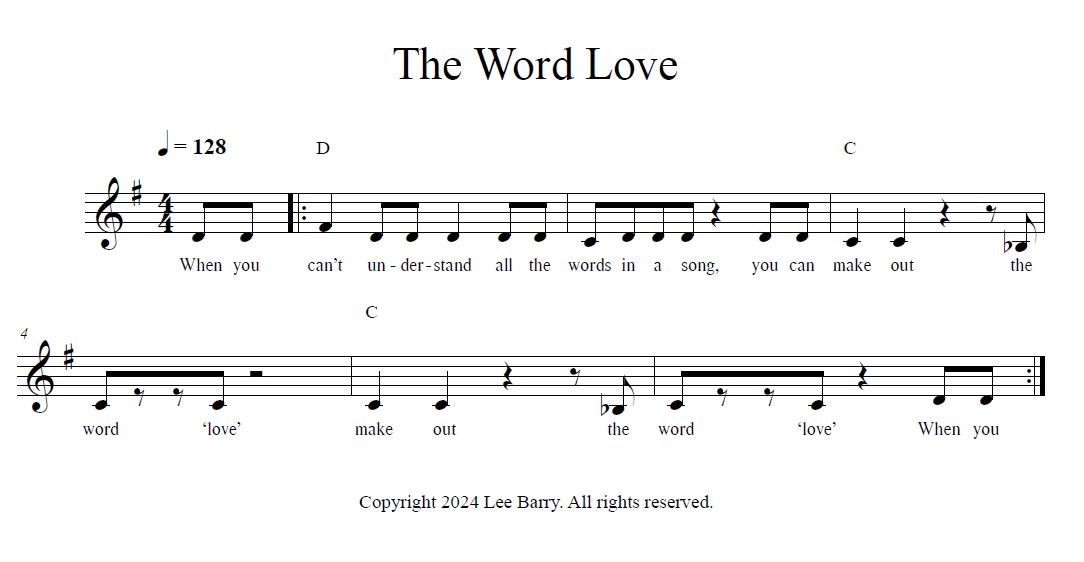
Even when you can’t understand all the words being sung in a song, you can make out the word ‘love’.
Revolution in Tunisia driven largely via Facebook and Twitter. An uprising was driven by social media narcissism. All over the world people are militating against plutocracy.
[1/14/2026: And continues on to today. In retrospect, the Arab Spring and the Occupy Wall Street movement were some of the ripple effects of the 2008 financial collapse. Some believe that 2008 was the beginning of the Fourth Turning. Typically, Turnings last about 20 years, so 2028 could be the start of the First Turning. Fourth Turnings are revolutionary periods, with World Wars and Depressions. Republicans and authoritarian regimes are in power during this dark age. If the Turnings are in fact real, then Democrats might be in power in the First Turning].
Excerpt Library (History I): "Discuss the Fourth Turning, the 2008 financial collapse, and the return of 'Spring'"
1/14/2014
When artists started experimenting with computer art in the late 1980s, people were more interested in the computers than they were in the art that was made on them. This was perhaps the very first stirrings of the widely generative nature of what a personal computer could do. People were making art with it but people probably had other ideas about what they could do with them.
In the early 1990s Roy Ascott wrote a prescient series of essays on the future of cognition in the visual arts. He coined the words telematic, telenoia, datapools, data sea, among others:
“And just around the corner, not playing peek-a-boo but close to doing so, is the artificial observer, the eye of the neural net, the artificial intelligence that will surely become a part of the observing system. But that’s the future.” (Roy Ascott, Photography At The Interface, 1992)
[1/14/2026: The Zoom meeting is essentially “telepresence”. Ubiquitous cameras and other data-collecting devices, as well as AI, are all machinic vision].
Musing on Music Mostly : “Discuss telematics and telenoia”
1/14/2015
Had the idea recently to delete complete multi-track sessions and reconstruct them from memory, just to see how things get rebuilt and how they stack up against the original version. It’s one thing to rewrite with a backup to revert to, and another to not have a restore point.
***
Remixes and rearrangements are frequently better than the original versions. Joe Cocker’s version of Ringo’s “Try With a Little Help...” made it infinitely better, adding a soulfulness that was latent in the original. The fact that Cocker used a triple meter in place of Ringo’s dotted shuffle feel was more of a resolution than a transformation, making it less clunky and square. Power Pop from the 80s also did this to some 70s top-40 songs, giving them a sharper and darker edge. In fact, music has been doing this continuously since the 60s, redefining the edges to look more menacing or sinister. (Art isn’t supposed to be conservative, at least not the vanguard.)
***
Art connects with you when you are ready for a transformational experience, or you were blind-sided by one.
1/14/2024
How is it that we can multitask on things that use different brain hemispheres and determine where they fall on the “ism” spectrum: premodern, modern, postmodern, metamodern (or remodern)? When I’m working on music, I feel it’s more modernist, but postmodern in the sense that I might be thinking about the art of it, and a metamodernist in the sense that it can be all those things. For example, I can read some art history (which is a “premodern” activity), and all gets woven into the creative process. When we’re in production mode, trying to figure things out and complete them, that’s more of a left-hemisphere process. When you’re zooming out and looking at what you’re doing over a span of 3 to 5 hours, you can see that it’s alternating between things that are historical and might be dealing with craft and things that are a little bit more intellectually atmospheric. Postmodernism, and to some degree metamodernism, are about those atmospherics.
1/14/2025
I’ve found that I can get into a good flow if I’m doing something visual, such as editing photographs, or choosing or curating images for existing music, as I have been doing with Photographs For Music. But this is distinctly different from goal-oriented tasks that have deadlines. The question is how we can do left-hemisphere focused activities and access right-hemisphere aspects if we’re in hunker-down mode. I think it has to do with taking breaks to do something completely different, or shut it completely down and go have some cake or other treats. Simple psychology having to do with using sugar as a cheap dopamine releaser


Comments
Post a Comment